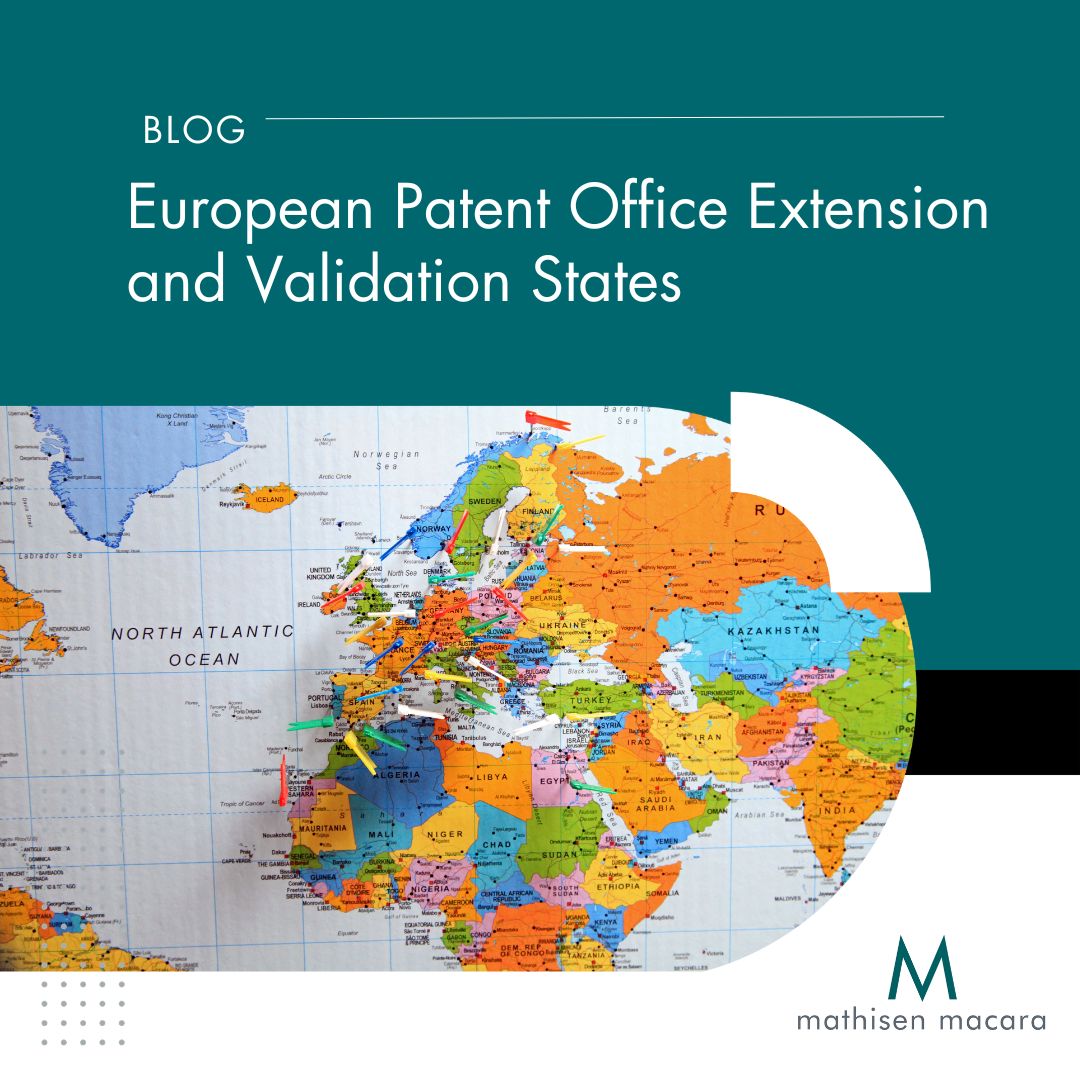
European Patent Office Extension and Validation States
Through the European Patent Office (EPO), applicants for patents can choose to seek protection for their inventions in some or all of the states which are members of the European Patent Convention (EPC). The EPC is not an EU institution and so its member states are more geographically extensive than those of the European Union. Currently, there are 40 member states: Albania, Austria, Belgium, Bulgaria, Switzerland, Cyprus, Czech Republic, Germany, Denmark, Estonia, Spain, Finland, France, United Kingdom, Greece, Croatia, Hungary, Ireland, Iceland, Italy, Liechtenstein, Lithuania, Luxembourg, Latvia, Monaco, Moldova, Montenegro, North Macedonia, Malta, Netherlands, Norway, Poland, Portugal, Romania, Serbia, Sweden, Slovenia, Slovakia, San Marino and Türkiye.
In addition, the European Patent Office (EPO) allows patent applicants to broaden the geographical reach of their European patents beyond the member states of the European Patent Convention (EPC) through extension and validation agreements. These are the result of bi-lateral agreements with the EPO and can provide a cost-effective way to obtain patent protection in countries that are not EPC contracting states.
Extension states are countries that have signed extension agreements with the EPO. By paying an extension fee during the patent application process, applicants can extend the effects of a European patent application and any resulting patent to those countries. In the past, there were several extension states, but these have diminished in number over the years as states who once had extension agreements have become full member states of the EPO. Currently, Bosnia and Herzegovina is the only active extension state.
Validation states operate under similar principles but are based on validation agreements. When a validation fee is paid, a European patent can have legal effect in the participating non-EPC countries, essentially providing protection comparable to a national patent. At present, the active validation states are Morocco, Tunisia, Cambodia, Georgia, and Laos.
The extension and validation systems are designed to mirror the EPC designation system. Applicants typically pay the relevant fees within the same time limits as the designation fee, making the process straightforward and efficient. Once granted, the patent holder must still complete any national post-grant requirements, such as filing translations or paying local fees, according to the laws of the respective country.
For applicants seeking broader international patent coverage, EPO extension and validation agreements offer an attractive route to secure protection in additional markets without the need to file separate national patent applications from the outset.
Our attorneys at Mathisen and Macara are experienced in all aspects of patent matters before the EPO and would be pleased to answer any questions you may have on the topic of extension and validation states, or on any other aspects of EPO practice